Get. Advice. First.
Get. Advice. First.
The biggest losses I've seen in property haven't come from bad markets or unexpected disasters. They've come from experienced investors taking on larger developments without the right people around them.
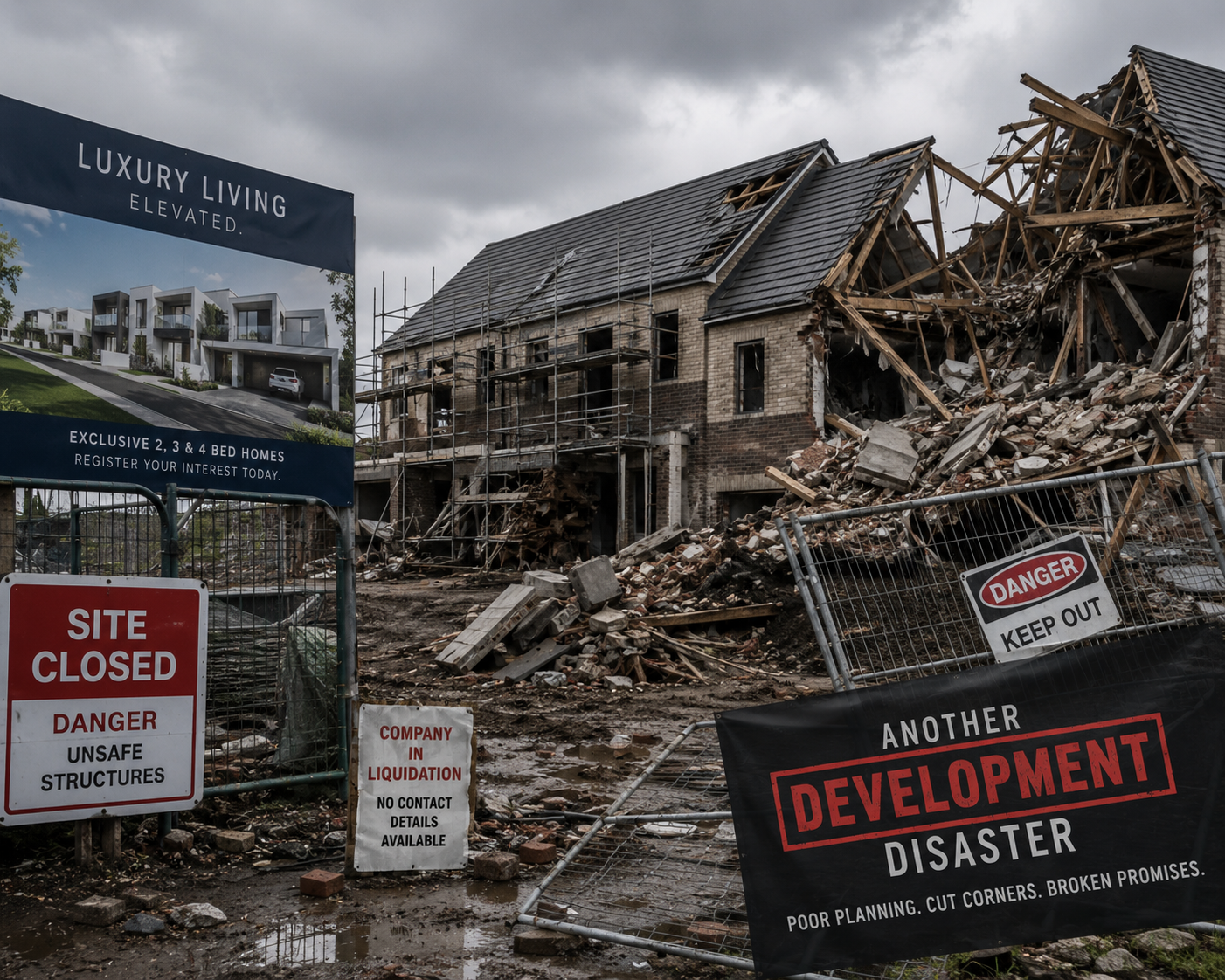
One investor I worked with lost the best part of £1 million on a scheme. He wasn't inexperienced. He'd built wealth through property and assumed the next step up would simply be a bigger version of what he'd already done.
It wasn't.
The problems weren't unusual either. They were entirely avoidable.
The contractor didn't have the experience for a project of that size. There was no employer's agent overseeing the contract, no client-side quantity surveyor controlling costs, no robust specification, and no contractual protection when things started to unravel. Monthly reporting was poor, so issues weren't identified until they became expensive.
None of those are extraordinary mistakes. They're the fundamentals of delivering larger developments successfully.
That's the pattern I see time and again.
Successful business owners and investors decide to move into larger projects, run the numbers, like the appraisal and become emotionally committed before they've identified the risks. The reality is that a large development isn't simply a small one with more zeros on the end. The complexity increases exponentially.
Having worked across PBSA, Build-to-Rent, co-living and commercial developments, one thing has become clear: the acquisition is often the easiest part. What determines profitability is everything that comes afterwards—funding, planning, delivery, professional oversight and execution.
The biggest risks are usually the ones no appraisal highlights:
No credible exit strategy beyond optimistic assumptions.
A valuation that isn't properly managed, leading to costly down-valuations.
Weak lender relationships, resulting in less competitive funding.
An inexperienced contractor with no employer's agent, no client-side QS and inadequate contractual protection.
Poor specifications and reporting that allow problems to grow unnoticed.
These issues rarely stop a purchase. They simply become painfully expensive later.
That's why experienced developers invest in experienced teams.
The value of independent advice before committing to a deal isn't simply about identifying opportunities—it's about avoiding mistakes that can cost hundreds of thousands of pounds.
The right advice can:
Eliminate deals that were never going to perform.
Identify risks before contracts are exchanged.
Build the right professional team around the project.
Put the correct contractual and cost controls in place from day one.
The developers who scale successfully aren't the ones trying to become experts in every discipline. They're the ones who understand where their expertise ends and bring in specialists for everything else.
Experience and capital are valuable, but they don't remove risk.
The investor who lost nearly £1 million had both.
Before committing significant capital to your next development, make sure someone who's already delivered projects at that level has reviewed the opportunity. The cost of getting experienced advice upfront is almost always insignificant compared to the cost of discovering the problems once the project is underway.