My first development started because I looked out of a window at the wrong building.

I had a lettings company at the time. I was at a viewing — a property a client was interested in — doing my job, nothing more. And while I was stood there, I looked out of the window and saw the building next door. An old, abandoned factory. Something about it stuck.

I asked who owned it. The answer I got was vague — "some guy, wanted to buy something else, who knows." That was it. No name, no number, nothing to go on. Most people leave it there. I couldn't.

So I went hunting for the owner. And here's the bit I still tell people, because it's the whole reason any of the rest happened.

I went on Google Maps and started going back through the old Street View images of the building — earlier and earlier, before it was abandoned, trying to see what it used to be. And on one of the old images, there was a sign on the building. A sign with a phone number on it.

I called the number.

He picked up. And it was the same owner — the man who still owned the factory. I couldn't believe my luck. A number off a faded sign in an old Street View image, and I was straight through to the one person I needed.

We got talking, and we agreed a price: £400,000 for the factory.

But I didn't want to own an old factory. I had no interest in being the owner of a derelict building. I wanted to *develop* it — build something on that land. And at this point I need to be honest about where I was: I knew almost nothing. I went and spoke to architects. I spoke to a planning consultant, and I didn't even know what a planning consultant *was* — I genuinely thought they did the same job as an architect, and had to learn on the spot that the two roles are completely different.

That's the truth of a first development. You're figuring out the basics in real time, while trying to look like you know what you're doing.

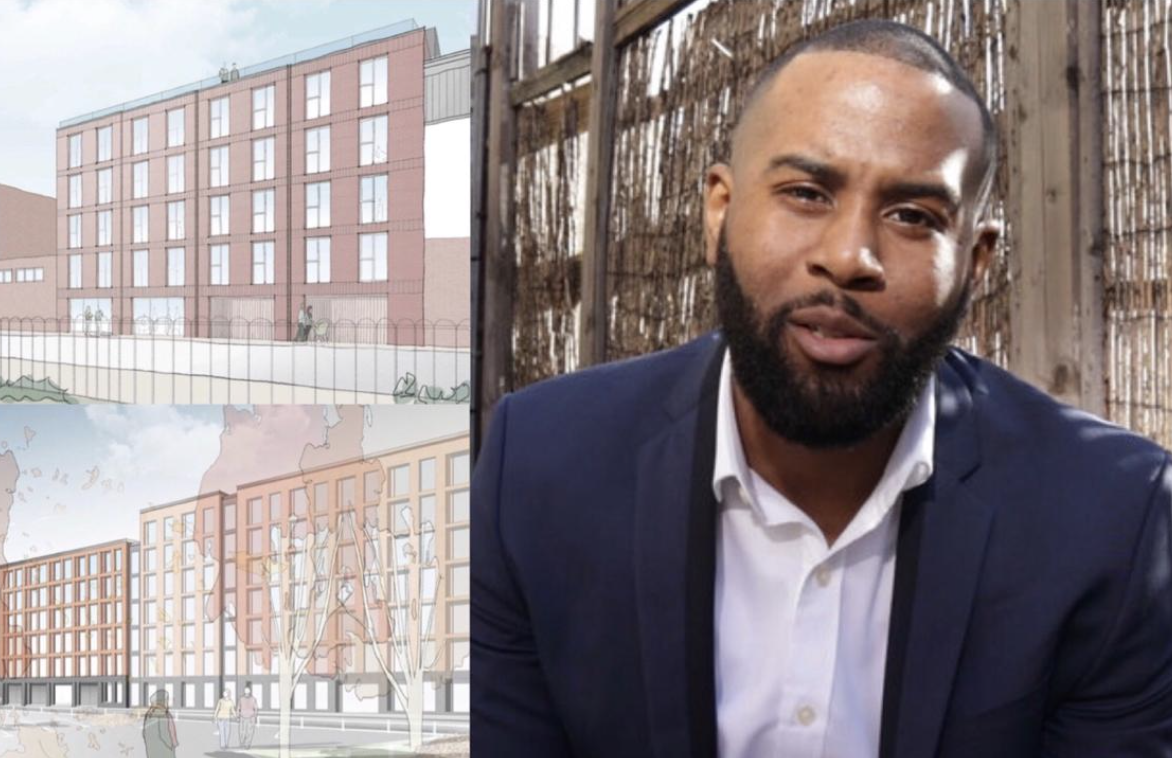
I paid the owner a £5,000 deposit for an exclusive 12-month window — so he couldn't sell to anyone else while I worked out whether it stacked up and went for planning. Then the long grind: architects, consultants, drawings, the planning process. It took the best part of a year. Eventually, permission came through for 70 apartments.

And then the owner got cold feet.

After all of it — the deposit, the year, the planning I'd fought for — he started trying to pull out. Back and forth, and at one point he simply wasn't selling it to me. I couldn't believe it. I'd taken a derelict factory and turned it into a site with planning for 70 homes, and the thing was slipping through my fingers over nerves. It took a lot of back and forth to hold it together and get it over the line.

Then the build. And the build had its own gut-punch: the first contractor went bust partway through. Everything stopped. I had to pick it back up, get construction restarted, and push the thing through to the finish. All in, it cost around £5 million to build and deliver.

Here's how it ended. When it came to letting, it went fantastically. We were oversubscribed — so much interest that letting the place was the easy part of the whole journey. After everything — the window, the phone call, the year of planning, the owner's nerves, the contractor going under — the finished building filled itself.

I look back at that deal and I see every mistake I didn't know I was making, and I see the one thing I got right, which was refusing to walk away. From a lettings guy at someone else's viewing, to 70 apartments, because I looked out of a window and then bothered to call a number off an old photo.

That's really the lesson, and it's the one thing that's never changed for me across every deal since. The deal existed for anyone. Anyone at that viewing could have looked out of that window. Anyone could have found that number. Most people see a problem — no name, no contact, a derelict building — and stop. The whole thing turned on being the one person who didn't.

What's the building you've walked past a hundred times and never once asked who owns it?